


Feature
  • LHC collisions at world-record energy

    LHC collisions at world-record energy

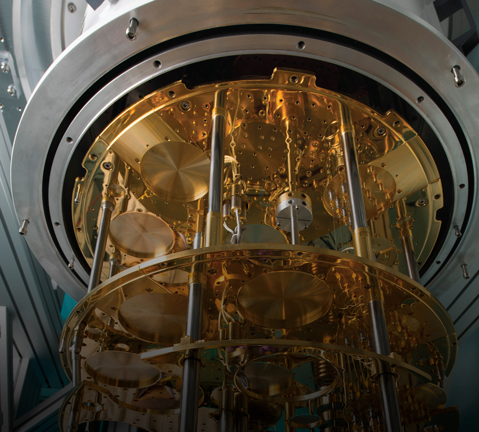
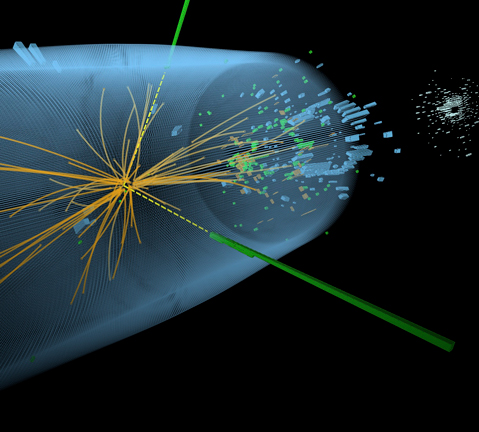
    The Large Hadron Collider at the European laboratory CERN set a world-record energy of 1.18 TeV per beam for proton collisions on Dec. 8, 2009. The LHC had its very first collisions at an energy of 450 GeV per beam on Nov. 23.

    Read more

  • CDMS opens the box, reveals results

    CDMS opens the box, reveals results

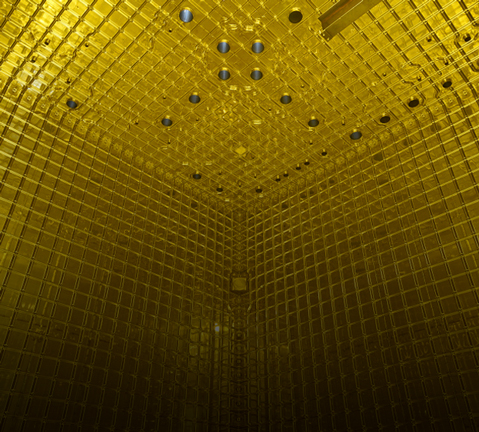
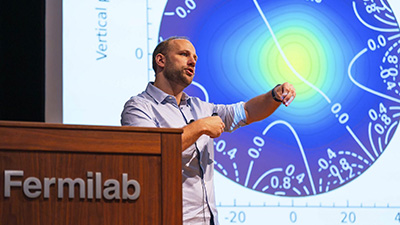
    Data recorded by the Cryogenic Dark Matter Search experiment shows two events that have characteristics consistent with the particles that physicists believe make up dark matter. However, these events may be consistent with background particles.

    Read more

  • NOvA Groundbreaking

    Recovery Act funding fuels Fermilab projects

    Fermilab has created a new Web site to provide citizens with clear and accurate information about how Fermilab is using funding from the American Recovery and Reinvestment Act. Read more to find out about the immediate benefits for our neighbors and our nation.

    Fermilab and the American Recovery and Reinvestment Act

  • Accelerator Applications: Furniture Finish

    Accelerator Applications: Furniture Finish

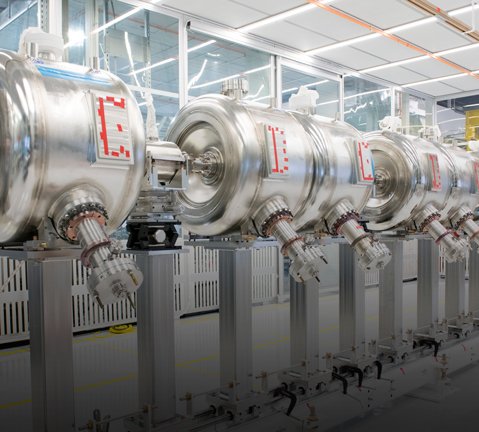
    Particle accelerators provide clues as to how the universe began, but they also prevent coffee rings. For about 25 years, companies around the world have been using beams of electrons from particle accelerators to make scratch- and stain-resistant furniture.

    Read more

photo
 

Fermilab Today—February 5, 2010

ARRA funds grant to young physicist for LBNE research

Christopher Mauger says he's the kind of guy who enjoys the chase; it's one of the reasons he studies the elusive neutrino.
Read full column


photo
vacuum oven

Fermilab Today—January 15, 2010

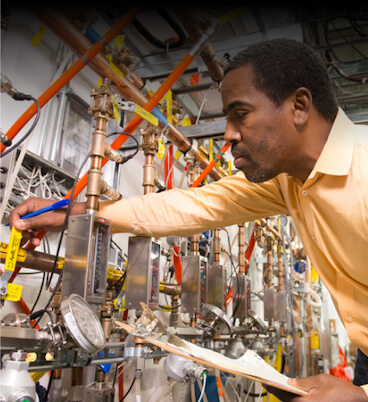
Stimulus spending on SRF heats up with vacuum oven

"When Rowen Stuffer got into the sheet-metal business in the 1940s, he manufactured ice cream trucks, among other products. Today his business is building equipment for next-generation particle accelerators."
Read full column


photo
51-foot panels

Fermilab Today—January 8, 2010

NOvA contract awarded to Wisconsin plastic company

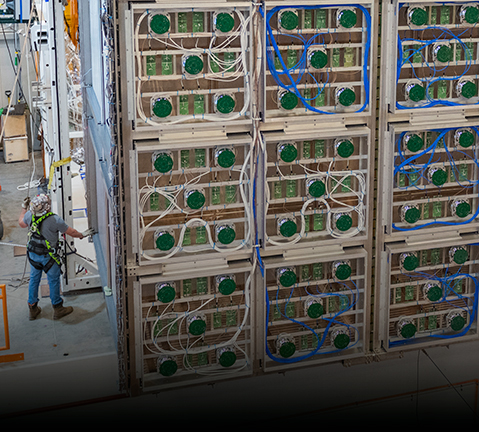
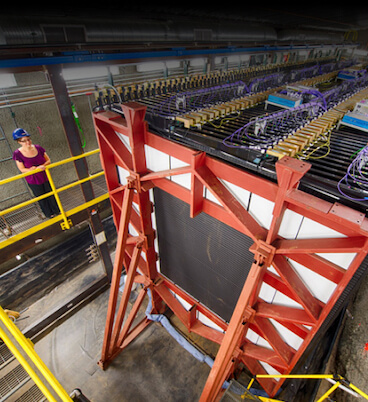
Fermilab has awarded a company based in Manitowoc, Wisc., with one of the largest purchase orders related to the NOvA neutrino detector project.
Read full column


Read more about Fermilab and the Recovery Act

US/LHC

The U.S. has contributed $531 million to the construction of the Large Hadron Collider, the world's largest particle collider, located in Europe. From the LHC Remote Operations Center at Fermilab, U.S. scientists will monitor the collisions produced by the machine.

USCMS

More than 900 scientists from the U.S. work on the CMS experiment at the LHC. Sifting through proton-proton collisions, scientists may find signs for dark matter particles, new subatomic forces and perhaps extra dimensions of space.


CDMS opens the box, reveals results

Data recorded by the Cryogenic Dark Matter Search experiment shows two events that have characteristics consistent with the particles that physicists believe make up dark matter. However, these events may be consistent with background particles.


MicroBooNE receives CD-0

Fermilab has moved a step closer to constructing a new neutrino experiment. The Department of Energy has given Critical Decision-0 approval to a new booster neutrino experiment called MicroBooNE.


Building a Dark Energy Camera

Scientists wonder why the universe is expanding ever faster. What mysterious force is at work? By recording the light from hundreds of millions of galaxies, they hope to find out what's going on.


Discovery of rare single top quarks

Scientists of Fermilab's CDF and DZero collaborations observed particle collisions that produce single top quarks, a discovery significant in the Higgs boson search.


Result of the Week

At Fermilab’s Tevatron Collider, physicists have been telling the story of their research results in weekly installments for more than five years.


Long Baseline Neutrino Experiment

The proposed Long Baseline Neutrino Experiment will explore the transformations of the world's highest-intensity neutrino beam to find out what role neutrinos played in the evolution of the universe.


Project X

Project X would allow for numerous experiments at the intensity frontier and would allow scientists to develop technologies for a future machine at the energy frontier.


Muon Collider

A muon collider would allow for a new generation of experiments at the energy frontier.


Physics at Fermilab

Learn how Fermilab is paving the way for the next particle physics discovery.


P5 report

The Particle Physics Project Prioritzation Panel proposes a strategic plan for the next 10 years to address the central questions in particle physics using a range of tools and techniques at three interrelated frontiers.